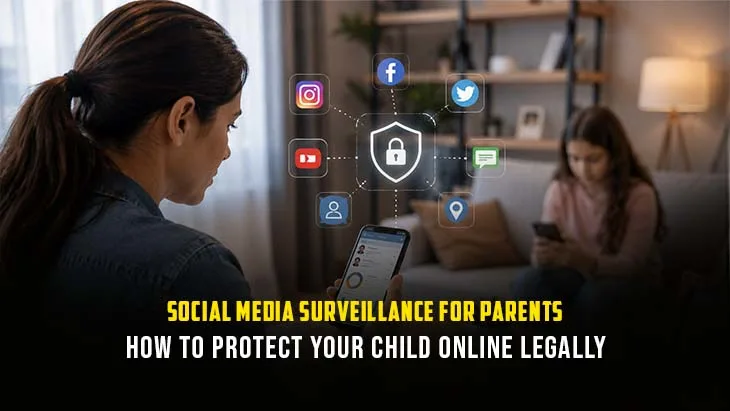
Social Media Monitoring for Parents refers to the act of responsibly monitoring a child’s use of social media to ensure their safety from cyberbullying and online predators, scams, inappropriate content, and digital addiction. Parents are entitled to know what their underage children are doing on the internet if it is for their safety, but they must respect privacy, keep the lines of communication open, and not be overly intrusive, or too much monitoring could cause damage to the trust relationship.
Quick Answer
Parents need to ensure their children use social media in a safe way, to recognise the signs of cyber-bullying or online grooming and to encourage them to use social media healthily. The best way to do this is to use parental controls, talk to us regularly, educate us about privacy and give us supervision that’s suitable for our ages, not lurking. Responsible monitoring fosters trust and aids children in their journey through today’s digital world.
Understanding Social Media Monitoring for Parents
Nowadays, kids spend a lot of time online. Digital platforms are essential to the lives of children and young people, whether they are talking with friends or watching videos, playing online games or posting photos on social media. These platforms offer avenues for learning, social interaction, and creativity, but they also present potential dangers online that parents might not know about.
That’s why it’s essential for social media monitoring for parents. Monitoring is not about spying on a child’s privacy or reading all of their communications. Rather, it’s about understanding their online behaviour, how to encourage safe online use, how to identify warning signs, and how to identify and utilise available tools to help parents create a safe online space.
Parents are living a different life than their parents. Parents are in a different situation than their parents. Children can be impacted by cyberbullying, fake profiles, phishing scams, online grooming, identity theft, harmful viral trends, and inappropriate content within minutes of going online. Social media can be used for seemingly innocuous interactions that can then be used inappropriately.
The supervision of children and young people via digital should thus be geared towards learning and not punishment. As children mature, they will make responsible decisions on their own more readily if they have been exposed to and understood what they mean by online safety principles.
Many organisations remind parents to be actively engaged in their child’s online experiences through communication, education and appropriate supervision, not over-supervision, including UNICEF, Common Sense Media, and the National Commission for Protection of Child Rights in India.
Why Parents Should Monitor Social Media Activity
The Internet can be a very useful educational tool, but it can also pose serious safety risks. Knowing about these risks can help parents make informed decisions about how to monitor their child’s online behaviour.
The most frequent ones are:
Protecting Against Cyberbullying
Cyberbullying can happen outside of school hours, and it can happen 24 hours a day via social networking sites. A child’s emotional health can be impacted by hurtful messages, being left out of online groups, rumors that are not true, embarrassing photos or repeated harassment.
Sometimes, children don’t report to parents because they are afraid that they won’t be able to use their devices. With responsible monitoring, parents can identify issues on time, before an emergency arises.
Preventing Online Grooming
Children are often targeted online via social media, games and messaging platforms before they are manipulated and exploited.
By talking with parents about online friendships and checking privacy settings, these risks can be minimised.
Identifying Harmful Content
Young children can stumble upon violent content, inappropriate content, inaccurate information, self-harm groups, gambling advertisements, or potentially harmful online challenges.
Monitoring can be used to help parents know what their children are watching and be able to have positive conversations.
Managing Screen Time
Overuse of social media can lead to sleep disturbances, lack of exercise, lower grades, anxiety and difficulty concentrating.
Recognizing the Signs Your Child Is at Risk Online
To identify indicators that your child may be at risk online.
Parents need to be aware of the following if they observe:
- Sudden secrecy about devices
- Rapid mood changes after using social media
- Declining school performance
- Withdrawal from family conversations
- New online friends they refuse to discuss
- Frequent deletion of browsing history
- Receiving gifts from unknown individuals
- Increased anxiety when notifications appear
These signs your child is at risk online are not a sign of trouble, but are a reason for a quiet discussion and extra parental supervision.
Is It Legal to Monitor Your Child’s Social Media?
A common concern parents have is: Is it legal to monitor your child’s social media? This will vary according to the child’s age; the purpose of the monitoring, and the methods being employed.
The responsibility to protect minors from harm, primarily rests with parents or legal guardians in India. It is generally acceptable to have a child’s online activity monitored for safety. Responsible monitoring must at all times ensure that the child’s growing independence and dignity are respected, whilst at the same time providing protection.
Keep monitoring from being an excuse for an unnecessary intrusion or total monitoring of every online interaction. With growing age, parents should gradually engage children into discussions regarding digital responsibility and inform them why some precautions need to be taken for this.
Privacy Rights of Children
While there are legal obligations parents have to their children, there is also a right for young people to their own space and emotional growth.
Healthy approach is:
- Explaining why monitoring is necessary.
- Setting clear family digital rules.
- Encouraging children to report uncomfortable online experiences.
- Respecting age-appropriate privacy.
- Building trust through honest communication.
When kids know why their parents need to supervise them, it’s likely they’ll be more willing to cooperate and learn better digital decision-making.
Indian Laws Parents Should Know
Parental control and privacy laws in India aid informed decision-making for families.
Although there is no specific legislation in India on parental monitoring, there are several laws that impact digital safety such as the Information Technology Act, child protection laws and regulations, data protection laws, and cybercrime laws. Parents should not use monitoring tools for illegitimate child safety concerns and should never access accounts of other people.
A better approach is to implement surveillance technology in conjunction with legal awareness, education, transparency and age-appropriate guidance.
Safe and Legal Practices for Monitoring Your Child’s Social Media
The first step towards knowing how to legally monitor your child’s social media activity in India is selecting the most appropriate ways to do it that prioritise security, transparency, and trust. Monitoring should not make children feel under surveillance, but should help them become responsible digital citizens. Engaging in online safety discussions with children and communicating the parent’s goal will lead to more trust and less risk in the long run.
Start with Open Communication
Good monitoring is through good communication. Rather than checking devices in secret, make sure your child feels at ease to talk about what they have been doing online. Discussions are a regular practice that enables children to identify suspicious behavior, understand privacy controls and when to ask for help.
A few ideas for conversation starters:
- Who do you enjoy talking to online?
- Have you seen anything that made you uncomfortable?
- Do you know how to report abusive users?
- What would you do if a stranger contacted you?
- Are your social media accounts set to private?
These conversations help kids to reflect on what they are doing online, and remind them that parents aren’t out to shame, but to help.
Review Privacy Settings Together
Many children have default privacy settings, and do not know what those settings mean. Please discuss account settings with your child on a regular basis and remind your child that:
- Profiles are private whenever possible.
- Location sharing is disabled unless necessary.
- Friend requests are accepted only from known individuals.
- Personal information such as school names, phone numbers, and home addresses is hidden.
- Two-factor authentication is enabled for added security.
Helping children understand how these settings function can empower them to manage their personal online security.
Use Parental Control Applications Responsibly
Parent control software can help educate people to have healthy online behaviour transparently. These tools may often enable parents to:
- Monitor screen time.
- Block inappropriate websites.
- Receive activity reports.
- Approve app downloads.
- Set device usage schedules.
- Restrict purchases.
- Filter age-inappropriate content.
Children must be aware of these tools and that they are used for protection and not punishment. As the kids grow up, gradually remove restrictions, and encourage the kids to make good choices themselves.
Monitor Digital Footprints
Anything that is uploaded online will add to a person’s digital footprint. Even after deleting photos, comments, videos, likes and shared content, these may still be available for years.
It’s important for parents to have kids ask themselves before posting:
- Would I be comfortable if my teacher saw this?
- Would I want future employers to see this?
- Could someone misuse this information?
- Am I sharing too much personal information?
- Could this hurt someone else’s feelings?
By teaching them these practices at an early age, kids can establish a positive reputation online.
Age-Appropriate Guidance for Children
All children are at varying maturities and so the monitoring strategies should be adapted according to their age. One size does not fit all as the younger child requires close supervision and the teenager a higher level of independence with continuing guidance.
| Age Group | Recommended Monitoring Approach | Parent’s Role |
| Under 10 years | Direct supervision and limited access | Teach basic internet safety and approve all online activities. |
| 10–13 years | Shared device access with parental controls | Discuss privacy, online friendships, and responsible posting. |
| 13–15 years | Moderate supervision with regular conversations | Encourage independent decisions while reviewing safety practices. |
| 16–18 years | Guidance-focused monitoring | Respect privacy, discuss risks, and provide support when needed. |
How often parents have to keep monitoring should be slowly phased out as the child gets older and replaced by trustful communication. This transition helps teenagers to make safe decisions on their own as adults.
Tools and Resources for Lawful Monitoring
Technology is a tool that can help parents without supplanting substantive conversations. By selecting credible tools, monitoring will be ethical, transparent, and aimed at child safety.
Built-in Device Controls
Parental control features are included in the majority of smartphones and tablets to help families:
- Set daily screen-time limits.
- Restrict inappropriate content.
- Control app installations.
- Monitor purchases.
- Enable safe browsing.
- Manage location sharing.
These are integrated into the operating systems and are typically configured and maintained on a regular basis.
Family Safety Applications
There are several extra features available in dedicated family safety apps, including:
- Location sharing between family members.
- Screen-time scheduling.
- Website filtering.
- App usage reports.
- Emergency contact features.
- Safe browsing alerts.
It is important for parents to have access to trustworthy apps that have established privacy policies, and make sure children understand what the app does and how it is being monitored before they agree to it.
Social Media Platform Safety Features
Numerous social media platforms now provide safety features which should be used by parents and children together. These include:
- Private account settings.
- Comment filters.
- Message request controls.
- Block and report functions.
- Restricted mode.
- Sensitive content filters.
- Family supervision options on selected platforms.
You can learn how these features work, and this is often the best way to do that, rather than using full-fledged third-party monitoring programs.
Educational Resources
There are also trusted organisations that publish regular guidance on online safety, prevention of cyberbullying and digital wellbeing, which parents can access. Organisations like UNICEF, CERT-In, the National Commission for Protection of Child Rights (NCPCR), Common Sense Media and child safety groups offer practical guidance that is continually updated as new online trends emerge.
Knowing about the risks that are emerging helps parents to identify them and use evidence-based approaches to keeping children safe online.
Potential Risks of Social Media Monitoring and How to Mitigate Them
While social media monitoring for parents is an important part of child protection, this can have a negative impact when it is done in excess or in secret. It is always better to give guidance and protection instead of control.
Risk 1: Loss of Trust
Parents may not be able to get children to disclose issues in the future if they learn that parents have been on their accounts and messages without telling them.
How to mitigate it:
- Explain monitoring expectations early.
- Create a family digital agreement.
- Tell children what information may be reviewed and why.
- Encourage honesty instead of punishment.
Risk 2: Overdependence on Monitoring Apps
While some online dangers can be identified by technology, it cannot replace parental involvement. Monitoring software is not always able to gauge context, sarcasm or distress.
How to mitigate it:
- Schedule regular conversations.
- Ask about online experiences.
- Teach children how to identify suspicious behaviour independently.
- Combine technology with active parenting.
Risk 3: Privacy Concerns
The child’s desire for independence grows with age. Ongoing monitoring can impact confidence and decision making.
How to mitigate it:
- Adjust monitoring according to age.
- Respect appropriate privacy.
- Review settings together rather than secretly.
- Encourage responsible digital behaviour.
Risk 4: Missing Hidden Warning Signs
Some children might use more than one account, use a temporary messaging service or a private group which parents don’t know about. Monitoring software is not necessarily able to identify all risks.
Parents need to be alert to changes in behaviour such as:
- Sudden withdrawal from family.
- Anxiety after receiving notifications.
- Avoiding school or friends.
- Declining academic performance.
- Changes in sleeping patterns.
- Unusual secrecy around devices.
These could be signs of cyberbullying or online grooming that parents should be aware of. These behaviours are not necessarily signs of online abuse, but should still be discussed with sensitivity and guided.
When Professional Help May Be Necessary
Everyone’s safety problems online can be solved through communication, education and proper supervision by parents. But in some cases, expert help might be needed.
If any of the following are present, parents may want to seek expert advice:
- A child appears to be communicating with unknown adults despite repeated warnings.
- There is evidence of online blackmail or extortion.
- Sensitive photographs have been shared without consent.
- Financial fraud has occurred through online platforms.
- Threats of physical harm have been received.
- Law enforcement has advised collecting digital evidence.
Some parents also look for the time to employ a private investigator for kids online security. This should only be considered under special circumstances that relate to credible safety concerns and is always within the confines of applicable laws. Any investigation should be conducted in accordance with privacy rights, without unlawfully entering into digital accounts and, if applicable, in cooperation with law enforcement.
Firstly, it’s important to turn to professional cyber security experts, child psychologists, school counsellors and law enforcement agencies as the best and first choice of support before hiring private investigators.
Social Media Monitoring vs. Privacy Invasion
One question that many parents have is when it is responsible supervision and when it is invading their privacy?
| Responsible Monitoring | Privacy Invasion |
| Explaining monitoring expectations | Secretly spying without discussion |
| Reviewing privacy settings together | Reading every private conversation unnecessarily |
| Using age-appropriate parental controls | Installing hidden spyware |
| Encouraging open communication | Punishing children for every online mistake |
| Teaching online safety | Controlling every online interaction |
The boundary between parental social media monitoring vs privacy invasion India law is not as black and white as it seems. It’s about finding a balance that keeps kids safe while also encouraging them to grow up in ways that support their personal growth. Prevention is the key to healthy digital parenting, and trust is the base.
Frequently Asked Questions
1. Is it legal to monitor your child’s social media in India?
Yes. Parents or legal guardians have a right to monitor a minor child’s Internet use for safety reasons, but this is not to be excessive or unreasonable or infringing on the child’s age and developing self-reliance.
2. What are the signs your child is at risk online?
These signs are sudden secrecy, mood changes, turning away from family, poor schoolwork, online anxiety, online friends they don’t know and reluctance to talk about what they do online.
3. Which parental control tools are best for families?
There is parental control features built into many smartphones, and screen-time management, content filtering, location sharing and reports for activities are available in good smartphone apps for parents. Parents should choose solutions that are trusted and have a transparent privacy policy.
4. Should parents read every message their child receives?
Not usually. It is preferable to have open communication and trust rather than reading all communication. Monitoring should be kept commensurate with the age of the child and any real safety issues.
5. What should parents do if they suspect online grooming or cyberbullying?
Be calm, preserve evidence, provide emotional support for the child, report abusive accounts on the platform, notify school (if appropriate), and contact law enforcement (if there is an immediate safety risk).
It takes much more than anti-monitoring software and screen-time limits to keep children safe online. The best strategy is to be educational, trustful, communicative and supervisive for age ranges. When parents are engaged with their children’s online experiences, they can be more aware of potential hazards, foster positive digital habits and better equipped to take appropriate action when they have concerns. Social media monitoring with parental responsibility, awareness of the privacy and control laws in India, and open and honest communication in the family can help create a safer online environment where children can reap the benefits of technology without harming themselves or others.